
Please excuse this quick commercial break: I am launching a new Substack newsletter called Next Generation Of.
In 2020, in the early days of the COVID-19 pandemic, I spent some time coding up a few lockdown-related hacks, as documented in this very blog. I enjoyed that so much that I’m doing it again on a slightly bigger scale. The Substack will document a series of quick apps, hacks, experiments that I produce in real-time, one roughly ever 2 weeks.
5 years on from my pandemic hacking, a new era of AI assistants and vibe coding has dawned. I as a solo software engineer can prototype an idea and ship something to users faster than ever. I think? The tools are evolving so quickly that it’s hard to say where exactly we stand right now. One of my main goals with this project is to explore and write about what’s become easier and what’s still hard in programming. In time, that may give me ideas for how to make the still sticky parts easier.
Subscribe now! The first issue drops in the coming week and a fresh one will follow roughly every 2 weeks.
Don’t fear, this blog will continue to plod on with occasional writing that doesn’t fit anywhere else. I’m using Substack for this new undertaking because I’m also interested in it as a product. Its success has revealed at least three non-obvious insights to me:
- Readers are willing to pay compelling writers directly. Duh. (Note I am not so delusional as to offer paid subscriptions – my Substack is free.)
- In an unexpected nod to traditional media, readers find something appealing about periodicals. One hallmark of successful Substacks seems to be a regular publication schedule.
- Readers somehow still like email as a distribution channel. This was maybe most surprising to me; I’d assumed email was well and truly dead outside of a professional and transactional context.
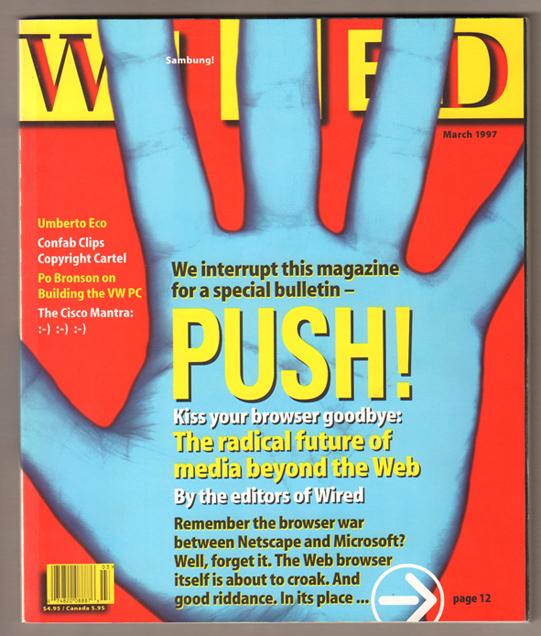
In other words, is Substack the age-old dream of push media finally realised? (IFYKY.)
We’ll see. It’s certainly a significant evolution of sorts of “traditional” blogging.
 Salt Mines